Explore raised motifs, soft contrasts and finishing details for cushions, bags and soft accessories. Start with a visual reference, then make the sample brief your own.
Artwork-led development · project details confirmed in sampling
Visual reference · materials and construction to be confirmed
Two ways to describe the texture
Fabric or raised artwork?
A chenille fabric cushion and a cushion with raised embroidery call for different sample details. This page focuses on raised decoration; if you mean the base fabric, start by checking the material and development route with Able.
01
Fabric-led brief
Chenille as the cushion fabric.
The brief is about the material used for the cushion surface, rather than a separate raised motif.
Bring a material reference
A swatch or supplier specification, proposed composition, colour and surface finish. A styled photograph alone cannot confirm a fabric.
Define the finished item
Cover only or filled cushion; front and reverse fabrics, finished dimensions, opening and edge details.
Confirm the route first
Ask Able to confirm material availability, sourcing and the proposed production steps before agreeing a sample.
Both briefs are editable planning tools. Dimensions, materials, quantities and commercial terms stay open until reviewed. If your design combines chenille fabric and raised decoration, describe the two separately in either brief.
Read the reference
Start with the surface.
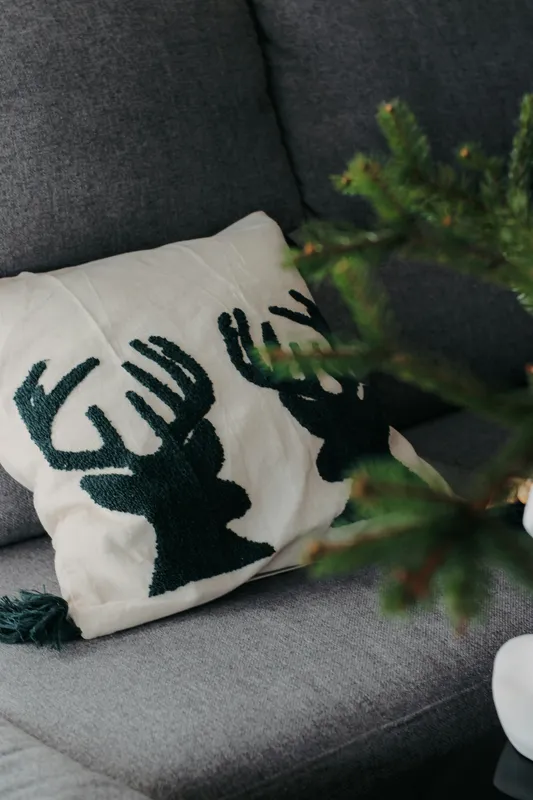
The photographed deer motif offers a visual starting point for scale, contrast and finishing. Read it as a texture reference; the image does not confirm the fabric composition or decoration technique.
01
Fabric & contrast
The light ground and dark motif create contrast in this reference. Specify the base fabric separately from the decoration yarn, and compare physical colour references when reviewing the sample.
02
Motif & placement
Use the deer silhouette to discuss how a raised design reads at cushion scale. Supply artwork dimensions, placement and a close-up of the texture you want reviewed; a photograph alone does not establish the technique.
03
Edges & the reverse
The visible corner tassel is one detail to review. Add your requirements for the reverse panel, opening, backing and edge finish, and state whether you need a cover or a filled cushion.
Bring the project together.
Share the base product, artwork, intended use, quantity and destination market. The team can review the proposed development route and discuss the current catalog.
A texture reference is a starting point. This page supports custom-development discussions; the decoration method, sample construction and production scope are confirmed for the individual project.
Texture, technique & placement
Include close-up views of the front and reverse of your reference. Identify the technique you want reviewed—chenille embroidery, towel or loop embroidery, or appliqué—alongside artwork dimensions, colours and placement on the base product.
Cover or complete cushion?
State whether your brief is for a cushion cover or a filled cushion. Include the finished dimensions, base fabric, reverse panel, opening and any proposed filling so the sample can be reviewed as a complete construction.
What the sample should confirm
List the texture, edge finish, backing, colour match and care expectations you want checked. Request relevant project-specific testing or documentation for your intended use and destination market.
Who performs each step
Ask the team to confirm the proposed route for decoration, cutting, sewing and finishing, including any partner-handled steps. General factory information provides company context; agree the process scope for your particular design during development review.